How AI Is Changing the Future of Healthcare
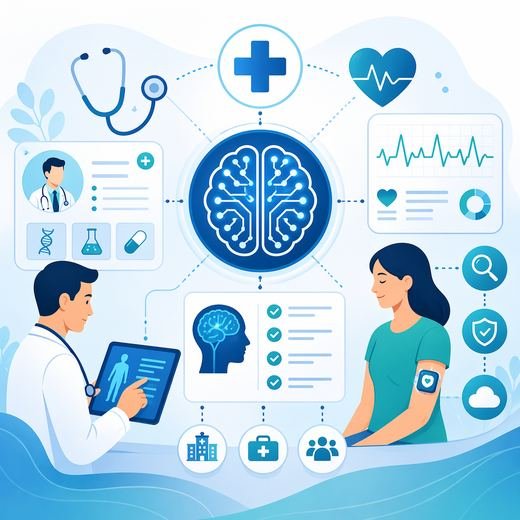
Healthcare has always depended on knowledge, timing, and careful judgment. Doctors, nurses, and specialists make decisions under pressure, often with incomplete information and limited time. Artificial intelligence is beginning to change that reality by helping healthcare systems process information faster and spot patterns that might otherwise be missed. While AI is not a cure for every problem in medicine, it is becoming an important tool in shaping the future of care.
One of the most promising uses of AI is in diagnosis. Medical imaging, for example, produces enormous amounts of data that must be reviewed carefully. AI systems can help identify subtle patterns in scans, such as early signs of disease, suspicious growths, or changes that deserve closer inspection. These tools do not eliminate the need for expert doctors, but they can act as a second layer of analysis, reducing oversight and improving consistency.
Predictive care is another major area of change. Hospitals and clinics increasingly use AI to identify patients who may be at higher risk of complications, readmission, or worsening symptoms. If a system can flag these risks early, healthcare providers may be able to intervene sooner. That can improve outcomes and reduce the strain on emergency care. In this sense, AI supports a shift from reactive medicine toward more preventive and proactive care.
Administrative burdens also matter more than people often realize. Healthcare professionals spend significant time on documentation, scheduling, billing, and record management. AI tools can assist with note summarization, workflow organization, and data retrieval, freeing more time for direct patient interaction. Even small efficiency gains can matter in an environment where minutes are often precious.
Patients are seeing changes too. Wearable devices and health apps now use AI to interpret patterns in sleep, movement, heart rate, and stress. Virtual assistants can remind patients to take medication, monitor symptoms, or encourage healthier routines. For people managing chronic conditions, this can create a stronger sense of continuity between clinic visits. It does not replace professional treatment, but it can support daily awareness and engagement.
Drug discovery is another field where AI is generating excitement. Developing new treatments traditionally takes years of testing and research. AI can help researchers analyze compounds, model interactions, and narrow promising directions faster than older approaches alone. This may shorten early-stage research and allow scientists to focus resources more effectively.
Still, healthcare is a field where caution matters deeply. Errors are costly, and trust is essential. AI systems can reflect bias, misunderstand unusual cases, or create false confidence if their limitations are ignored. Medical care involves more than pattern recognition. It includes ethics, empathy, communication, and the ability to interpret context that does not fit neatly into data. A patient is not just a collection of signals.
There are also privacy concerns. Health data is deeply personal, and any system handling it must meet high standards of security and accountability. People should benefit from innovation without losing control over sensitive information.
The most realistic future is one where AI supports healthcare professionals rather than replacing them. A skilled doctor with strong tools is better equipped than a skilled doctor working alone. The same is true for nurses, technicians, and public health teams. Technology becomes most valuable when it strengthens human care.
Artificial intelligence is changing healthcare by improving diagnosis, prediction, efficiency, and research. But its greatest value may lie in helping medical professionals spend more energy on what patients need most: accurate decisions, timely attention, and humane treatment. The future of healthcare should be smarter, but it should also remain deeply human.