Will AI Replace Jobs or Transform Them?
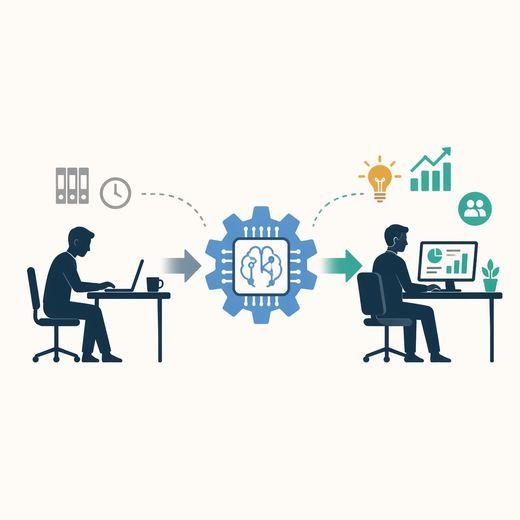
Few topics create as much anxiety around artificial intelligence as the future of work. Whenever a new technology begins to automate tasks, people naturally wonder whether their jobs are at risk. With AI, those concerns feel especially intense because the technology is expanding beyond factory work and routine software processes. It can now write text, summarize meetings, answer customer questions, analyze documents, and assist with research. So the question is understandable: will AI replace jobs, or will it mainly transform them?
The most honest answer is that it will do both, but not evenly and not all at once. Some tasks will disappear. Some roles will shrink. Some entirely new forms of work will emerge. This has happened before with earlier technological shifts, but AI feels different because it touches both manual and cognitive work. It can assist not only with physical repetition but also with language, planning, and pattern recognition.
Jobs that depend heavily on routine, predictable tasks are more vulnerable. If a role mostly involves entering data, following standard templates, processing claims, or answering common questions, AI can often perform a large part of that work faster and at lower cost. Businesses will be tempted to automate those functions, especially in competitive industries where efficiency matters. For workers in these areas, the change can feel threatening and immediate.
At the same time, many jobs are not disappearing so much as being redesigned. A marketer may still create campaigns but now use AI for audience insights and draft generation. A lawyer may still advise clients, but use AI to review contracts more quickly. A teacher may still lead the classroom, while AI helps with lesson planning and feedback. In these cases, the role remains human, but the workflow changes. Productivity can rise, and so can expectations.
This means the future of work may depend less on specific job titles and more on how adaptable workers become inside those jobs. People who learn how to collaborate with AI tools may gain a strong advantage. They may complete tasks faster, produce better first drafts, and make more informed decisions. But technical familiarity alone is not enough. Human skills such as communication, ethics, leadership, negotiation, empathy, and creative judgment are likely to become even more important because they are harder to automate well.
There is also a social dimension to consider. Even if AI increases overall productivity, the benefits may not be distributed fairly. Some workers may gain leverage and opportunity, while others face displacement, lower wages, or reduced bargaining power. That is why the conversation cannot focus only on technology. It must also include training, education, labor policy, and responsible business leadership. A productive economy is not automatically a fair one.
History suggests that societies adapt when they invest in people, not just tools. Workers need reskilling opportunities that are practical, affordable, and tied to real market needs. Employers need to think beyond short-term cost reduction and consider long-term talent development. Governments and institutions need to help create transitions that are manageable rather than chaotic.
It is too simplistic to say AI will either eliminate work or leave everything unchanged. The reality is more complex. AI will likely remove some jobs, redefine many others, and create demand for new capabilities that do not yet exist at scale.
The central challenge is not simply surviving automation. It is making sure human beings remain economically valuable, professionally respected, and meaningfully involved in the systems they help build. If that happens, AI will not just replace work. It will reshape it.