Can We Trust AI? Understanding Its Strengths and Limitations
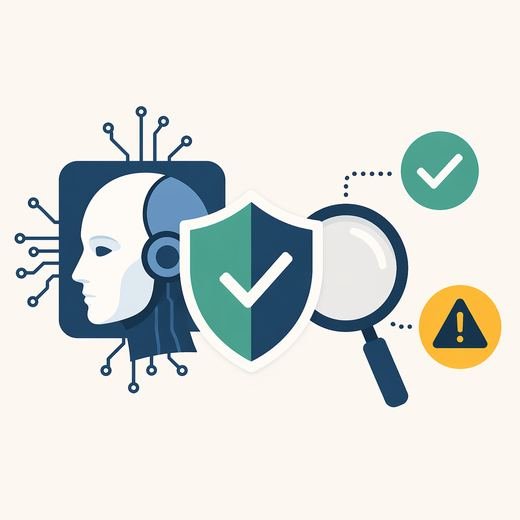
Artificial intelligence often inspires two opposite reactions. Some people see it as astonishingly capable and believe it will soon outperform humans in countless fields. Others treat it with deep suspicion, assuming it is unreliable, manipulative, or overhyped. The truth lies somewhere in between. AI can be remarkably useful, but trust in it should be thoughtful rather than blind. To use AI well, people need to understand both what it does effectively and where it can fail.
One of AI’s greatest strengths is pattern recognition. It can process large amounts of information far more quickly than a person and detect relationships that might otherwise go unnoticed. That makes it useful in areas such as recommendation systems, image analysis, forecasting, and language support. AI can also scale easily. Once trained and deployed, it can assist millions of users at once, which is one reason it has spread so rapidly across industries and consumer tools.
AI is also valuable for handling repetitive tasks. It can draft summaries, sort data, generate standard responses, and support workflows that would otherwise consume time and attention. In that sense, it can be a powerful assistant. When used properly, it reduces friction and allows people to focus on more important work.
But usefulness is not the same as trustworthiness. AI systems can sound confident even when they are wrong. They may produce false information, misread context, or miss nuance that a human would catch. This is especially true in situations involving ambiguity, specialized expertise, or real-world judgment. A tool may generate an answer that looks polished while still containing subtle mistakes. That can be dangerous because people often assume confident language means reliable reasoning.
Another limitation is that AI does not understand the world in the same way people do. It identifies patterns in data, but it does not possess lived experience, moral responsibility, or genuine comprehension. It can mimic empathy without feeling it. It can summarize ideas without truly believing or questioning them. That does not make it useless, but it does mean users should be careful about assigning it more authority than it deserves.
Trust also depends on context. It may be reasonable to trust AI for brainstorming, drafting, or low-risk assistance. It is much harder to justify trusting it fully for medical advice, legal decisions, financial guidance, or personnel evaluations without strong human oversight. The higher the stakes, the more important verification becomes.
Transparency plays a major role as well. People are more likely to trust systems when they understand how those systems are being used, what data they rely on, and where the limits are. Honest communication matters. It is better to present AI as a useful tool with weaknesses than as an infallible replacement for human judgment.
The healthiest approach may be calibrated trust. That means neither rejecting AI outright nor handing over decisions too easily. It means checking important outputs, understanding risk, and matching the tool to the task. A calculator is trusted for arithmetic, but not for moral choices. AI should be treated with a similar sense of fit and proportion.
So, can we trust AI? Yes, in certain ways and within certain limits. We can trust it to assist, to accelerate, and to reveal patterns. But we should not trust it blindly, especially when accuracy, fairness, or human consequences are involved. Real trust is not built through hype. It is built through understanding, accountability, and careful use.