Why Fast Delivery Is No Longer a Luxury
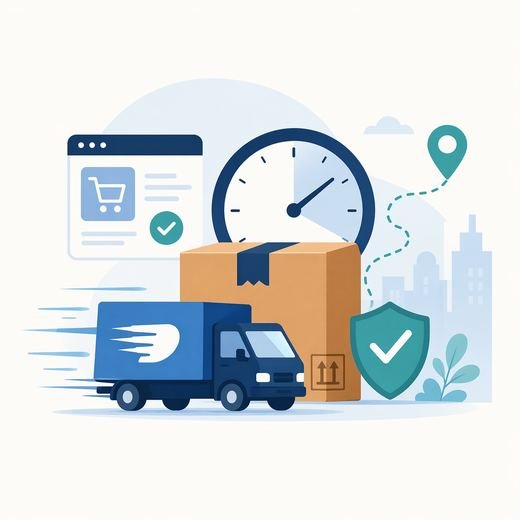
Delivery once felt like a back-end issue customers accepted with patience. Now it shapes buying decisions so strongly that speed and reliability have become part of the core value of e-commerce. Seen this way, the issue is not only operational. It directly affects how safe and understood the customer feels while moving through the buying journey.
Fast delivery used to feel like a premium feature, but in many categories it has become part of the basic expectation customers bring to online shopping. Because the screen creates distance, shoppers look for replacement signals before they commit. They watch for clarity, professionalism, and signs that the store understands what matters from the buyer’s side rather than only from the seller’s side. That is why first impressions matter so heavily in digital commerce.
This shift is not only about impatience. Delivery speed affects trust, convenience, and the sense that a brand respects the customer’s time and daily reality. That is why presentation and process matter so much. In online retail, confidence is often built through structure: what is explained, what is visible, and how consistently the business behaves across the page and after the click. The customer rarely separates design quality from business quality.
When shoppers compare similar products, fulfillment often becomes the deciding factor. A store with clear, dependable shipping can outperform one with lower prices but vague timelines. This may not feel dramatic compared with major campaigns or platform changes, but these quieter elements often decide whether interest grows or disappears. They reduce friction in ways customers may not consciously describe, yet strongly respond to. Even when shoppers do not say this out loud, their behavior reflects it.
Speed does not always mean same-day service. In many markets, what matters more is predictability. Customers can plan around three reliable days better than one uncertain promise. When this part is handled well, buyers feel guided instead of pressured. They can move forward with less effort because the store has already done some of the work of answering doubt. Confidence tends to rise when the path ahead feels obvious.
Fast fulfillment also reduces cancellation anxiety. Once an order begins moving quickly, buyers feel progress, which lowers second thoughts and improves the overall experience. Over time, these choices influence more than single conversions. They shape how people talk about the store, whether they return, and how much future marketing effort is needed to earn attention again. The result is better economics as well as better customer memory.
Stores that treat delivery as part of the product create stronger loyalty. In e-commerce, the package journey is not separate from the brand; it is one of the brand’s loudest messages. In a category where many options can look similar at first glance, thoughtful execution becomes a form of differentiation. It turns a functional store into a more dependable one. And in crowded markets, memory is a powerful commercial asset.
Fast, dependable fulfillment has become part of the promise customers believe they are buying. In e-commerce, delivery speed no longer lives in the background; it lives in the brand experience. That point becomes even stronger when we remember how quickly people compare options online and how little patience they usually have for uncertainty.