Phishing, Ransomware, and Beyond: Understanding Modern Cyber Threats
The internet has opened up a lot of opportunities for people to talk to each other, do business, and come up with ideas. As computers and phones get better, the bad guys on the internet are getting smarter too. These days the dangers on the internet are not just computer viruses or junk emails. There are now attacks like phishing, ransomware, spyware, and social engineering that can trick both computers and people. To protect yourself, you need to understand what these threats are.
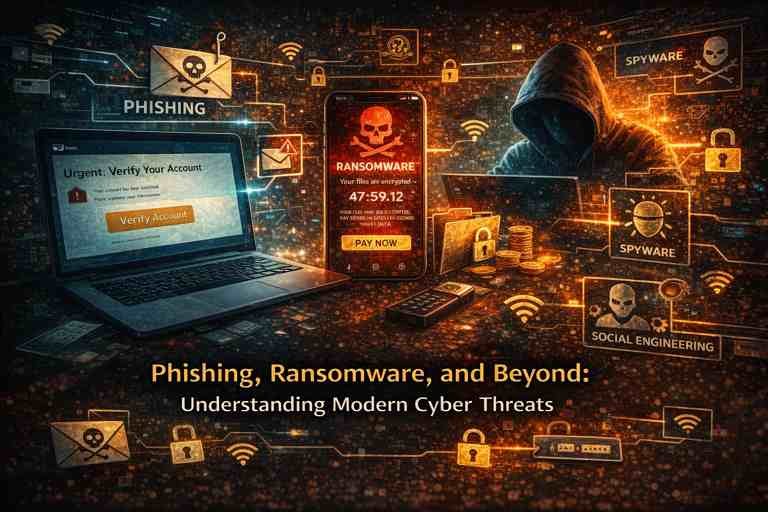
Phishing is one of the common problems on the internet. It is when someone pretends to be a trusted person or company to trick you into giving them information. They might send you an email, a text message, or a notification on media that looks real. They might say you need to do something else, like check your account or change your password. They want to scare you or make you curious so you click on a link or give them secret information. Even people who are good at using the internet can fall for phishing if it is done well.
Ransomware is another danger on the internet. It is when someone uses software to lock your device or encrypt your files so you cannot use them. Then they ask you for money in a special kind of money called “cryptocurrency” to unlock your device. Businesses, hospitals, schools, and individuals have all been attacked by ransomware. It can be very bad if important documents or secret information are involved. Even if you pay the money, there is no guarantee you will get access to your device again. So it is better to prevent these attacks from happening in the place.
There are other threats on the internet besides phishing and ransomware. Spyware is software that secretly collects information about what you do on the internet without you knowing. It can track what websites you visit, what you type, or even your login information. Social engineering attacks trick people into giving away information by pretending to be someone they trust. They might say they are from customer support, a coworker, or a friend to get you to give them information.
One reason these threats are so effective is that they target how people think and feel. Hackers know that if they can make you curious, scared, or in a hurry, you might make a mistake. If you get a message that looks like it is from your bank or a known company, you might do what it says without checking if it is real. Just using technology is not enough to stop these mistakes; you need to be aware of what’s going on to be safe on the internet.
Luckily there are things you can do to reduce your chances of being attacked. You should be careful when you click on links or open attachments, especially if someone is asking for information. You should check who is sending you a message before you do what it says. Using passwords and special codes to log in can help keep you safe. You should also update your software regularly so it can fix any weaknesses that the bad guys might use.
It is also an idea to make copies of your important information. If someone uses ransomware to lock your device, you can still get to your information if you have a copy. You can use software to help find suspicious activity, but being safe on the internet is still one of the best ways to protect yourself.
The threats on the internet will keep changing as technology gets better. The bad guys are always coming up with ways to attack, so you need to keep learning about what is going on to stay safe. If you know about the threats, you can change how you protect yourself.
In today’s internet world, knowledge is one of the ways to protect yourself. If you understand what phishing, ransomware, and other threats are, you can make choices on the internet. By being aware of what’s going on and using technology responsibly, you can enjoy the benefits of the internet while avoiding the dangers.