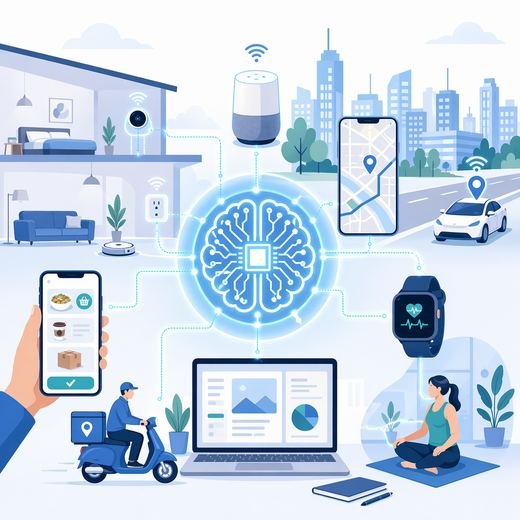
How AI Is Making Apps Feel More Personal

A practical way to understand AI is to look at the small moments where work becomes easier. In mobile apps, the change often begins with an app that remembers what matters without forcing users through menus. For product teams and everyday users, this matters because daily pressure is rarely caused by one huge problem. It is usually the pile of small decisions, repeated questions, missing details, and delayed follow-ups that slows people down. AI can help by adapting interfaces, suggestions, and reminders to individual habits. The point is not to replace people, but to remove some of the friction around their decisions. The best use cases are not the ones that sound impressive in a presentation; they are the ones that make a normal day less messy and a little easier to manage.
The real strength of AI in this area is its ability to handle patterns. It can read, compare, sort, and suggest at a pace that would be tiring for a person. That does not mean it understands the whole situation the way a human does. It means it can prepare a cleaner starting point. A good result depends on the person who checks the output, asks better questions, and notices what feels wrong. When the human role is kept clear, the technology becomes practical rather than threatening.
A simple example would be a fitness app changing its plan after several skipped mornings. On its own, that may not sound revolutionary. But anyone who has worked under time pressure knows how valuable a better first step can be. A cleaner summary can save a meeting. A faster classification can prevent a missed customer. A useful suggestion can help a beginner move from confusion to action. AI works best when it removes the first layer of effort so people can spend more attention on judgment, tone, quality, and the details that affect real outcomes.
The danger is assuming too much from limited behavior. This is where many AI projects lose their value. A tool can produce confident language even when the answer needs checking. It can repeat old mistakes if the data behind it is weak. It can make people feel efficient while quietly reducing accountability. That is why AI should be introduced with limits. Teams need to know what the tool is allowed to do, what must be reviewed, and when a human decision is required.
A sensible approach is to start small. Ask for feedback when the app changes recommendations. Then measure whether the work actually improves. Did the customer get a faster and clearer answer? Did the team save time without losing accuracy? Did the user feel more informed rather than more controlled? These questions are more useful than asking whether a tool is advanced. AI is only valuable when it improves the experience for people on both sides of the task. The future of mobile apps will not be built by automation alone; it will be built by people who know where automation belongs.
Looking ahead, personal apps will succeed when they explain themselves clearly. The most successful users will not be the ones who chase every new feature. They will be the ones who build habits: test the output, protect private information, keep records of important decisions, and stay close to the people affected by the system. AI can make work faster, clearer, and more personal, but it still needs direction. In the end, the best technology should make human effort count for more, not make humans disappear from the work.