Can AI Make Education More Personal and Effective?
Education has always struggled with a simple challenge: every student learns differently, yet most systems are built to teach groups in roughly the same way. Teachers do their best to adapt, but time, class size, and administrative demands make true personalization difficult. This is one reason artificial intelligence has attracted so much attention in education. It offers the possibility of tailoring learning more closely to the individual without requiring teachers to do everything manually.
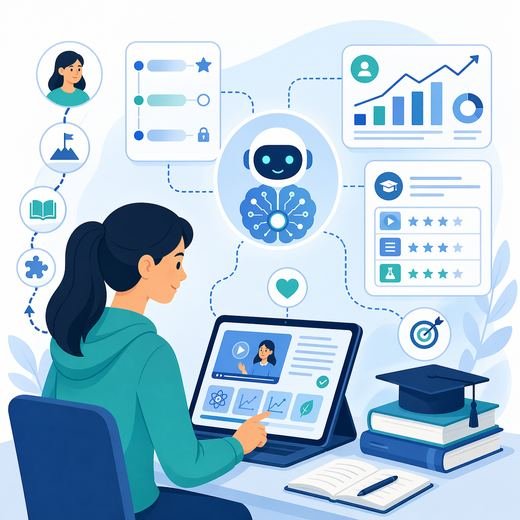
In practice, AI can already support personalized learning in several ways. Learning platforms can analyze how quickly a student moves through material, where they hesitate, and which concepts create repeated mistakes. Based on that information, the system can recommend extra practice, review lessons, or more advanced challenges. A student who understands one topic quickly does not need to wait. Another who needs reinforcement can receive it sooner. That kind of responsiveness can make learning feel less mechanical and more humane.
AI can also make feedback more immediate. In many classrooms, students submit work and wait for comments, sometimes long enough to lose momentum. Digital tools powered by AI can provide instant responses on grammar, math steps, reading comprehension, or quiz performance. Immediate feedback helps students correct misunderstandings before they become habits. It also gives teachers useful insight into where the class is struggling overall.
Language learning offers a strong example. AI tools can now simulate conversation practice, pronunciation support, and adaptive vocabulary drills. Students who may not have frequent access to one-on-one speaking opportunities can still practice in a structured way. This does not replace a skilled teacher, especially for nuance and encouragement, but it extends practice beyond the classroom.
There are clear benefits for teachers as well. Educators spend large amounts of time on grading, planning, and repeated explanations. AI can reduce some of that administrative pressure by organizing materials, generating practice questions, and identifying trends in student performance. When used wisely, this can give teachers more time for the parts of education that matter most: motivation, explanation, discussion, and care.
Still, personalization is not automatically the same as better education. If AI tools are used carelessly, learning can become too transactional. Students may receive efficient content without receiving inspiration, connection, or deeper curiosity. Education is not only about accuracy. It is also about confidence, social growth, discussion, and the ability to wrestle with ideas. A system that adapts perfectly to performance data may still miss the emotional side of learning.
There are also concerns about access and fairness. Schools with better funding may adopt stronger tools, while others fall behind. Data privacy is another issue, especially when student behavior is tracked closely across platforms. These concerns do not mean AI should be rejected, but they do mean it should be introduced with caution and clear values.
The most promising future is not one where AI replaces teachers, but one where it strengthens their ability to support each student. A thoughtful teacher can recognize fear, potential, and motivation in ways software cannot. But software can help that teacher notice patterns sooner and respond more precisely.
AI can make education more personal and effective, but only when it is used to support human teaching rather than reduce learning to a set of automated decisions. The goal should never be education without people. It should be education where technology helps people teach and learn better.