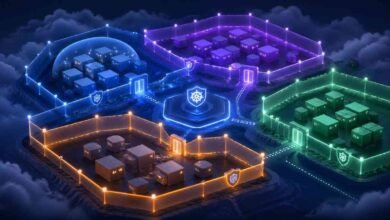
The Future of Cybersecurity in an AI-Driven World
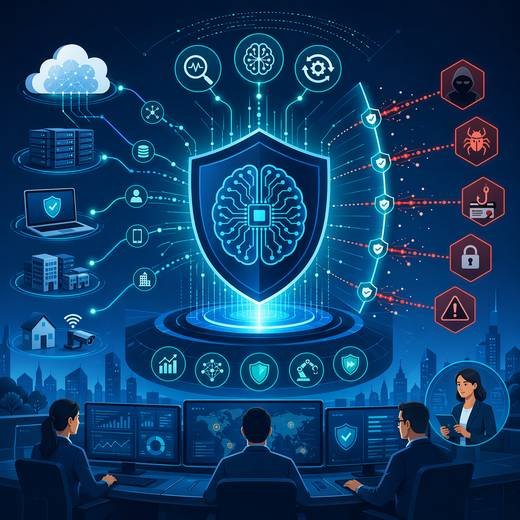
Artificial intelligence is changing cybersecurity in ways that are both promising and unsettling. On one hand, AI can help security teams detect anomalies, analyze huge volumes of data, and respond to threats faster than traditional manual processes allow. On the other hand, the same technologies can help attackers automate scams, improve phishing, generate malicious code, or adapt their tactics with greater speed. The future of cybersecurity will be shaped by this two-sided reality.
For defenders, AI offers real advantages. Modern digital environments produce overwhelming amounts of information: login events, device activity, network behavior, alerts, user patterns, and application logs. Human analysts alone cannot review all of it effectively. AI systems can help identify unusual behavior, prioritize alerts, and surface patterns that would otherwise remain buried in noise. Used well, that can improve speed and focus.
AI also supports security operations by reducing repetitive workload. Teams can automate parts of investigation, summarize threat intelligence, and improve response coordination. This matters because many organizations face security staffing shortages and rising threat complexity at the same time. Intelligent assistance can strengthen capability where human attention is stretched thin.
Yet the offensive side is evolving just as quickly. Attackers can use AI to write more convincing phishing emails, imitate tone and style, create realistic synthetic media, and scale social engineering with alarming efficiency. Fraud no longer needs to be clumsy to be effective. It can now be polished, personalized, and fast. That raises the bar for what ordinary people and organizations must be able to recognize.
There is also a deeper challenge around trust. As AI-generated content becomes more convincing, people may find it harder to distinguish legitimate communication from manipulation. Voices, messages, documents, and visual material may all become easier to fake. In that environment, verification processes become even more important than before.
The future of cybersecurity will therefore require more than just adopting new tools. It will require rethinking how identity, authenticity, and evidence are established. Organizations will need stronger verification workflows, smarter awareness training, clearer governance for AI use, and better controls around sensitive systems and data.
This shift also affects ethics and accountability. If security teams rely on AI systems to classify behavior, recommend actions, or flag users, questions arise about bias, transparency, and oversight. AI can support decision-making, but it should not replace human judgment in areas where context and responsibility matter deeply. Security decisions often affect access, privacy, and trust, so governance must evolve alongside capability.
What makes this moment important is that cybersecurity is no longer reacting only to new software threats. It is adapting to a new information environment. The challenge is not simply more attacks. It is more ambiguity, more automation, and more pressure on trust itself.
That future will reward adaptability. Security teams, business leaders, and ordinary users will all need to become more comfortable with continuous learning as the technology landscape keeps changing.
In an AI-driven world, cybersecurity will become even more strategic. The organizations that succeed will not only deploy advanced tools. They will combine technical capability with strong judgment, careful policy, and a culture of verification. That balance may become the defining advantage of modern digital security.