Can We Trust AI? Understanding Its Strengths and Limitations
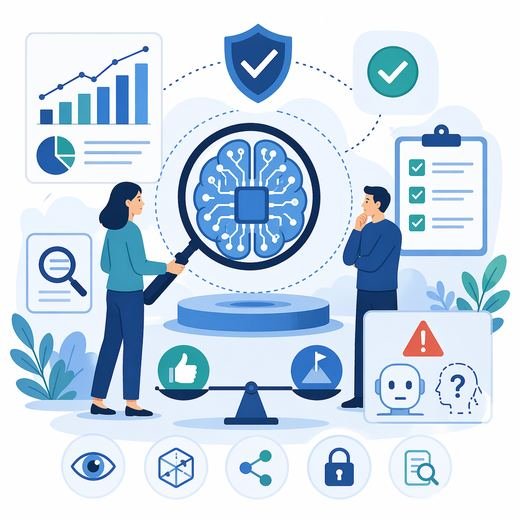
Trust in artificial intelligence is a complicated thing. On one hand, AI can process information faster than people, identify patterns in huge data sets, and assist with decisions in medicine, finance, education, and daily life. On the other hand, it can make mistakes, reflect bias, and sound more confident than it deserves. This mix of power and uncertainty is exactly why people keep asking the same question: can we really trust AI?
A good starting point is to avoid treating trust as absolute. The better question is where AI deserves confidence, under what conditions, and with what kind of oversight. In narrow tasks with clear patterns, AI can be extremely useful. It can sort emails, detect fraud signals, recommend relevant content, transcribe speech, and flag irregularities in large systems. In these contexts, speed and scale give it real value.
Its strength comes from pattern recognition. AI is especially effective when there is a large amount of structured or semi-structured information to analyze. It does not get tired, distracted, or bored by repetition. That makes it powerful for scanning images, reviewing logs, comparing records, or finding statistical relationships that a human team might overlook. Used carefully, it can become an excellent support tool.
But pattern recognition is not the same as understanding. AI does not possess human judgment in the full sense. It may generate plausible answers that are incomplete, misleading, or simply wrong. In some systems, especially generative tools, it can produce confident language even when the underlying output is unreliable. This creates a dangerous illusion of authority. The smoother the answer sounds, the easier it is to trust it more than we should.
Bias is another limitation that directly affects trust. If a model is trained on flawed, incomplete, or unbalanced data, its outputs may reflect those distortions. This matters most in high-stakes settings such as hiring, lending, law enforcement, or healthcare. If people trust the system too much, they may fail to question results that should be reviewed carefully.
Transparency also matters. Trust grows when users understand what a system is doing, where its data comes from, and what its limits are. Blind trust is not good trust. It is dependency. A well-designed AI system should make it easier for people to verify, challenge, and interpret results rather than hiding its reasoning behind technical mystery.
The strongest approach is usually calibrated trust. That means appreciating what AI does well while keeping human judgment in the loop. A doctor may use AI to assist diagnosis, but not surrender responsibility. A business may use AI forecasts, but still apply context and common sense. A student may use AI for study support, but still verify important facts. Trust works best when it is paired with accountability.
It is also worth remembering that human decision-making is not perfect either. People are biased, inconsistent, emotional, and often overwhelmed. AI does not need to be flawless to be useful. It needs to be understood clearly enough to be used in the right roles. The real danger often comes not from the tool itself, but from overconfidence in what it can do.
We can trust AI in specific ways when it is transparent, tested, monitored, and matched to the right task. We should not trust it as if it were infallible. Its strengths are real, but so are its limits. The goal is not total faith or total rejection. It is learning how to use AI intelligently without confusing assistance with wisdom.