Can AI Make Education More Personal and Effective?
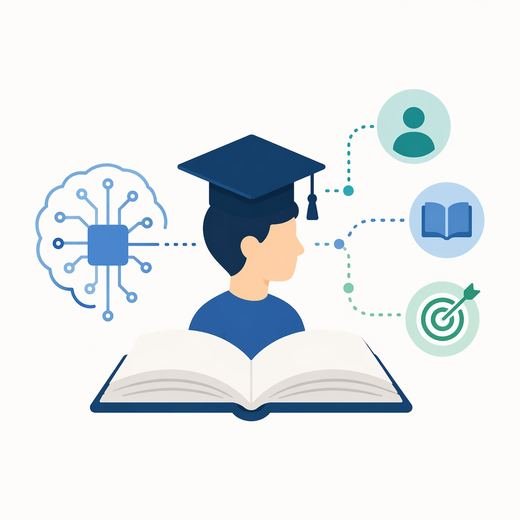
Education has always faced a difficult challenge: how do you teach many students while still respecting the fact that every learner is different? In most classrooms, students move at different speeds, struggle with different concepts, and respond to different teaching styles. Teachers do their best to adapt, but time, class size, and limited resources often make fully personalized learning impossible. This is one reason artificial intelligence has attracted so much attention in education. It offers the possibility of making learning more personal, responsive, and effective.
One of the most promising features of AI in education is its ability to adapt. Instead of giving every student the exact same path, an AI-supported system can respond to individual performance. If a student struggles with fractions, grammar, or vocabulary, the system can offer more practice, different explanations, or a slower pace. If another student learns quickly, it can provide more advanced material rather than forcing unnecessary repetition. That kind of flexibility can make learning feel less frustrating and more encouraging.
Immediate feedback is another important advantage. In traditional settings, students may wait hours or days to learn whether their answer was correct. AI tools can respond almost instantly. That helps learners adjust while the material is still fresh in their minds. It also gives teachers useful information about where students are getting stuck. Instead of guessing who needs help, they can identify patterns and respond more effectively.
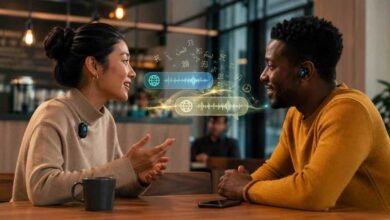
AI may also improve access to education. Students who do not have access to private tutoring can still receive individualized support through intelligent learning tools. Language learners can practice conversation. Writers can receive suggestions to improve clarity and structure. Students with disabilities may benefit from speech recognition, reading assistance, or adaptive interfaces that make learning more accessible. In these ways, AI can reduce some of the barriers that prevent students from reaching their potential.
Still, education is not only about efficiency or performance. It is also about confidence, curiosity, relationships, and character. A good teacher does more than explain content. A teacher notices when a student is discouraged, encourages effort, creates a sense of belonging, and helps connect knowledge to the real world. AI cannot fully replace that human presence. It can support the learning process, but it cannot replicate the emotional intelligence and moral guidance that meaningful education requires.
There are also concerns that should not be ignored. If students rely too heavily on AI to generate answers, summarize readings, or complete assignments, they may weaken the very skills education is supposed to build. Critical thinking, patience, original expression, and problem-solving all depend on active engagement. Schools will need to rethink assessment, classroom expectations, and digital literacy so that AI becomes a tool for learning rather than a shortcut around it.
Privacy and fairness matter as well. Educational AI systems often rely on large amounts of student data. Schools and families need assurance that this information is handled responsibly and that the systems do not reinforce hidden bias. Technology in education should expand opportunity, not quietly narrow it.
The future of education will likely involve a partnership between teachers and intelligent tools. Used wisely, AI can make learning more adaptive, inclusive, and efficient. But the most effective education will still be deeply human at its core. Students need guidance, challenge, encouragement, and real connection.
So, can AI make education more personal and effective? Yes, it can. But only when it is designed and used in ways that strengthen, rather than replace, the human relationships that make learning truly meaningful.