How Artificial Intelligence Is Quietly Reshaping Everyday Life
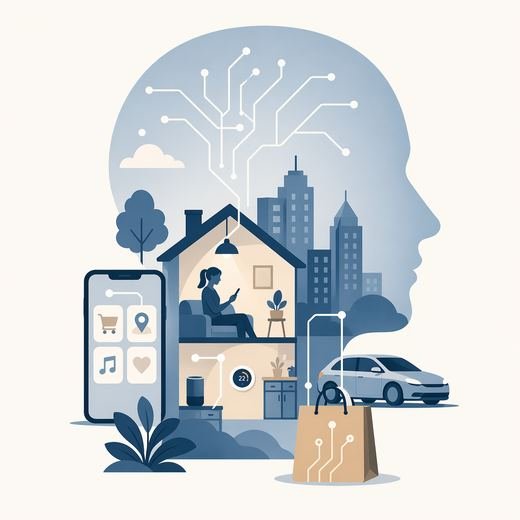
A few years ago, artificial intelligence sounded like a futuristic idea reserved for research labs, giant tech companies, and science fiction movies. Today, it has slipped into ordinary life so smoothly that many people use it every day without even noticing. It recommends the next song on a playlist, helps a map predict traffic, suggests the right reply in an email, and even improves the photos people take on their phones. AI is no longer a distant concept. It has become part of the background rhythm of modern living.
One reason AI feels so natural is that it often works behind the scenes. People rarely open an app and think, “Now I am using artificial intelligence.” Instead, they experience convenience. A shopping platform knows what products may interest them. A streaming service suggests a series that matches their taste. A keyboard corrects spelling errors before they become embarrassing. These small moments save time, reduce friction, and make technology feel more personal.
In health and wellness, AI is also beginning to play a meaningful role. It can help wearables track sleep patterns, detect irregular heart rhythms, and encourage healthier habits. Doctors and medical teams are using AI tools to support image analysis, patient prioritization, and administrative work. The purpose is not to replace human expertise but to strengthen it. When used well, AI can handle repetitive tasks and let professionals focus on decisions that require empathy, context, and judgment.
Education is changing too. Students now have access to tools that can explain concepts in different ways, adjust to different learning speeds, and provide immediate feedback. For someone struggling with math, writing, or language learning, that kind of support can be incredibly valuable. At the same time, it raises important questions. If AI can help write essays or solve problems, how should schools teach critical thinking, originality, and responsibility? The technology creates opportunities, but it also forces people to rethink what meaningful learning looks like.
At home, AI has become part of daily routines. Smart speakers answer questions, home devices learn preferred settings, and security systems can identify unusual activity. These tools can make life easier, especially for families, older adults, or busy professionals. Still, convenience comes with trade-offs. The more intelligent a system becomes, the more data it usually needs. That is why discussions about privacy, transparency, and control matter just as much as technical progress.
Workplaces have also changed because of AI. Many employees now use it to summarize documents, organize schedules, write first drafts, or analyze data faster. This can boost productivity, but it also changes expectations. People are being asked to work more strategically, not just more quickly. The value of human skills such as communication, creativity, and ethical judgment is becoming even clearer in an age where machines can automate routine tasks.
What makes this moment especially interesting is that AI is not transforming life through one dramatic invention. It is doing so through hundreds of small improvements that accumulate over time. The result is a world where everyday tools feel smarter, faster, and more adaptive than before.
The real question is not whether AI is part of daily life. It already is. The deeper question is how people choose to live with it. If society uses AI thoughtfully, with a strong focus on human needs and values, it can become one of the most practical and empowering technologies of our time.