Why Human Creativity Still Matters in the Age of AI
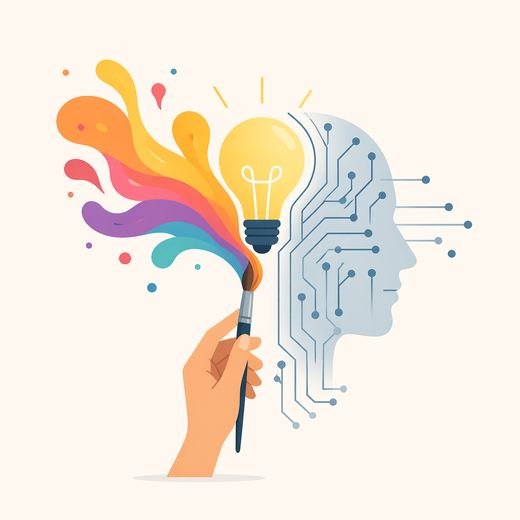
Whenever artificial intelligence enters a creative field, a familiar question appears almost immediately: if machines can generate words, images, music, and ideas, what is left for humans to do? It is an understandable concern, especially in a world where AI tools can produce impressive results in seconds. Yet the rise of AI does not make human creativity less important. In many ways, it makes it even more valuable.
Creativity is often misunderstood as the ability to produce something quickly or in large quantities. AI is undeniably good at that. It can generate multiple design directions, write several versions of a paragraph, or offer endless visual styles at remarkable speed. But speed is not the same as meaning. Human creativity is rooted in lived experience, emotional memory, personal taste, intuition, contradiction, and cultural context. A machine can imitate patterns. A person can create from desire, struggle, love, fear, humor, and hope.
That difference matters. When a novelist writes a powerful scene, the effect does not come only from polished language. It comes from an understanding of grief, longing, awkwardness, or joy that feels recognizably human. When a designer creates a memorable brand, the result is not only a combination of colors and shapes. It reflects a deeper understanding of people, identity, and aspiration. AI can support the process, but it does not replace the interior life that gives creative work its soul.
In fact, many creators are beginning to treat AI the way earlier generations treated cameras, editing software, or musical synthesizers: as tools, not threats. A photographer still needs an eye, even with a powerful camera. A filmmaker still needs vision, even with advanced editing tools. In the same way, someone using AI effectively still needs taste, judgment, and originality. The strongest creative work often comes not from handing everything over to a machine, but from knowing how to direct, refine, reject, and reshape what the machine offers.
Another reason human creativity matters is that audiences care about intention. People are naturally drawn to stories behind the work. They want to know who made it, why it was made, and what inspired it. That emotional connection is hard to manufacture. Even when AI helps create part of the output, people often respond most deeply to the human choices around it: the message, the perspective, the vulnerability, and the risk.
There is also the issue of surprise. AI is trained on what already exists, which means it tends to work within patterns it has learned. Humans are the ones who break those patterns. They invent strange new combinations, challenge norms, and create movements that did not exist before. Real innovation often begins with a person doing something that feels irrational, unusual, or deeply personal. That kind of leap is one of the great strengths of human imagination.
Of course, AI will continue to change the creative process. It may reduce certain technical barriers and allow more people to experiment. That can be a very good thing. But lowering the barrier to creation does not eliminate the need for vision. If anything, it makes discernment more important. When everyone can generate content, what stands out is not volume. It is authenticity.
The future of creativity will not belong only to humans or only to machines. It will belong to people who know how to use intelligent tools without surrendering their voice. In that future, human creativity remains the spark that gives art, storytelling, and design their lasting power.