How Phishing Still Outsmarts Smart People
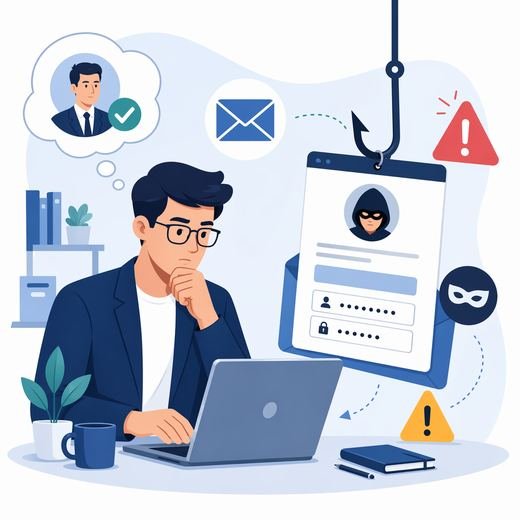
Phishing attacks continue to succeed for a reason that makes many people uncomfortable: they do not primarily target ignorance. They target trust, speed, routine, and emotion. That is why intelligent, experienced, and even highly educated people still fall for them. In many cases, phishing works not because someone knows too little, but because they are moving too quickly in an environment designed to reward quick responses.
At first glance, phishing may seem easy to spot. Security advice often focuses on obvious warning signs such as bad spelling, strange email addresses, or suspicious links. While those clues still matter, many modern phishing messages are far more polished. They may imitate banks, delivery companies, supervisors, or familiar software services with convincing design and language. Some are so carefully timed that they arrive just when the target expects to hear from that sender.
The real power of phishing lies in psychology. Attackers know how to create urgency, fear, curiosity, or authority. A message might say an account has been locked, a payment failed, a delivery was missed, or a manager needs something immediately. In those moments, people are more likely to react before thinking. The attack succeeds not through force, but through emotional pressure.
Workplaces are especially vulnerable because people are trained to be responsive. Employees are expected to answer messages, process requests, approve payments, and solve problems quickly. That creates an environment where hesitation can feel inconvenient. Attackers exploit that cultural pressure. A fake invoice, document-sharing request, or internal message can look routine enough to slip through the mental filters people normally trust.
Phishing has also expanded beyond email. It now appears through text messages, social media, collaboration platforms, and even phone calls. A fraudulent message on a messaging app may feel more believable than a traditional email simply because it matches how people communicate every day. The channel changes, but the method stays the same: create confidence, trigger reaction, and collect credentials or access.
What makes phishing particularly dangerous is that one mistake can grow quickly. A stolen password may lead to account takeover. A fake login page may expose internal systems. A malicious attachment may install software that spreads across a network. The first click may seem small, but the consequences can become large very fast.
The best defense is not paranoia. It is disciplined skepticism. People do not need to distrust every message, but they do need to pause when something feels urgent, unusual, or slightly off. Verifying through another channel, checking the sender carefully, hovering over links, and slowing down before entering credentials are simple habits that interrupt the attacker’s advantage.
Organizations should also avoid treating phishing as a problem of individual embarrassment. When people fear blame, they are less likely to report suspicious messages quickly. A stronger culture encourages early reporting, shared learning, and recognition that attackers are trying to manipulate ordinary human responses.
Phishing remains effective because it understands people. That is exactly why cybersecurity training must go beyond technical rules and address behavior, context, and decision-making under pressure. The goal is not to shame people for being human. It is to help them recognize when someone else is trying to use that humanity against them.