Why Small Businesses Can No Longer Ignore Cyber Risk
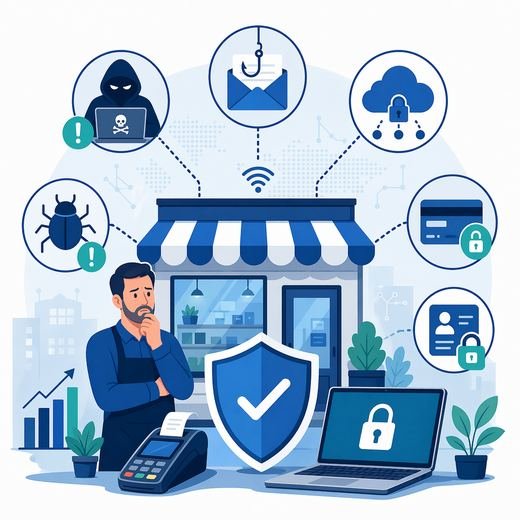
Small businesses often assume cybercriminals are mainly interested in large corporations with famous brands and massive databases. That assumption creates a dangerous blind spot. In reality, small businesses are often highly attractive targets precisely because they tend to have fewer defenses, leaner teams, and less formal security structure.
A small company may store customer details, payment records, contracts, payroll information, supplier accounts, and internal communications all in one connected environment. From the outside, that information has real value. From the inside, however, it may feel like ordinary daily business data rather than something attackers would actively pursue. That gap between perception and reality is where risk grows.
Many small businesses operate under intense practical pressure. Owners focus on sales, staffing, operations, cash flow, and customer satisfaction. Security can easily become something they plan to improve later. The problem is that attackers do not wait for a convenient moment. A phishing email, ransomware infection, stolen password, or compromised payment request can interrupt business immediately.
The impact of a cyber incident on a small company is often more severe than people expect. A large enterprise may have dedicated legal, technical, and communications teams to absorb the shock. A small business may have none of that. If systems go offline, payments stop, customer trust weakens, and recovery costs rise quickly. Even a short disruption can damage reputation and cash flow at the same time.
What makes the challenge more difficult is that many cyber risks now arrive through ordinary business tools. Cloud platforms, payment services, remote collaboration apps, and connected devices all improve efficiency, but they also expand the attack surface. Security is no longer only about one office network. It includes employee accounts, personal devices used for work, third-party vendors, and shared online systems.
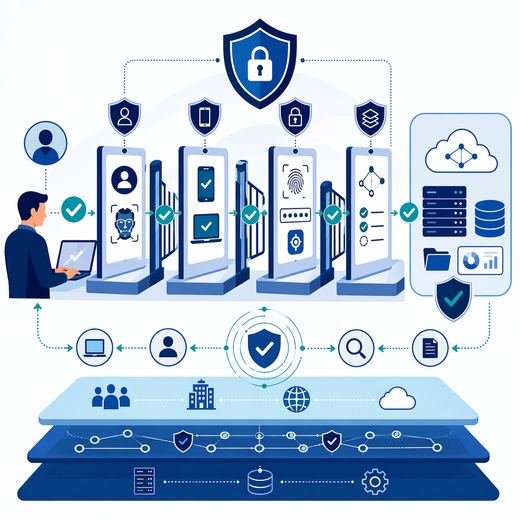
The good news is that strong cybersecurity for a small business does not have to begin with expensive complexity. It often starts with a few disciplined basics: unique passwords, multi-factor authentication, regular software updates, secure backups, staff awareness training, restricted account access, and clear payment verification procedures. These measures are not glamorous, but they are highly effective.
Leadership also matters. When owners and managers take security seriously, employees are more likely to do the same. If staff members see security as optional, they will treat it that way. If they see it as part of protecting the business and its customers, better habits become more natural.
Small businesses should also think about recovery, not only prevention. Backups, response contacts, and a simple incident plan can make the difference between a disruption and a crisis. No company can guarantee perfect protection, but every company can improve its ability to respond calmly and quickly.
Cybersecurity is now part of business resilience. For small companies, that means treating digital safety not as a luxury for later growth, but as a foundation of sustainable growth itself. The businesses that survive and earn trust over time are often the ones that understand a simple truth: in a digital economy, protecting the business is inseparable from running the business.