Ransomware and the Pressure to Pay
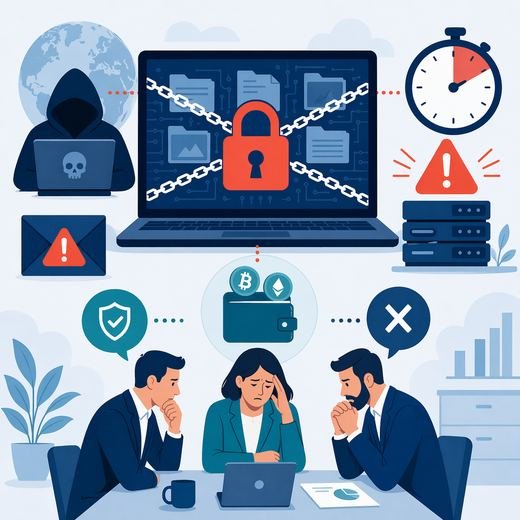
Ransomware has become one of the clearest examples of how cybercrime mixes technology with psychological pressure. At a technical level, ransomware can lock systems, encrypt files, or disrupt access to critical operations. At a human level, it creates urgency, fear, and confusion. That combination is exactly why it remains such a powerful threat.
When ransomware hits, the first reaction is often operational panic. Staff cannot access documents, communication slows down, systems fail, and uncertainty spreads quickly. In hospitals, schools, manufacturers, and businesses, the question becomes immediate: how long can we function like this? Attackers understand that timing matters. Their goal is not only to damage systems. It is to make the victim feel trapped enough to consider paying.
This is where the real pressure begins. A ransom demand may look like the fastest route back to normal. The victim sees deadlines, threats of data leaks, and warnings that files may be permanently lost. In that environment, decision-makers are forced to weigh financial damage, downtime, customer impact, and legal risk all at once. The attackers are counting on stress to narrow their options.
Yet paying is not a simple solution. There is never a guarantee that encrypted data will actually be restored, that stolen information will be deleted, or that the attackers will not strike again. In some cases, organizations pay and still face prolonged recovery. In others, payment can create further legal or regulatory complications depending on jurisdiction and the groups involved.
The best defense against that pressure is preparation before the attack ever begins. Secure backups, offline recovery options, patching, network segmentation, staff awareness, and tested incident response plans reduce the leverage criminals hold. If an organization knows it can restore systems without relying on the attacker, the emotional force of the ransom demand weakens considerably.
Ransomware also reveals the cost of weak fundamentals. Many incidents begin through phishing, exposed remote access, unpatched software, or stolen credentials. These are not mysterious entry points. They are known weaknesses that often remain open because of delay, underinvestment, or false confidence that the organization is too small or unimportant to be targeted.
Communication is another critical part of response. During a ransomware incident, confusion can become almost as damaging as the malware itself. Clear internal leadership, technical coordination, legal guidance, and honest communication with affected parties all help limit chaos. The more prepared an organization is to manage the human side of the event, the better its recovery tends to be.
The broader lesson is that ransomware is not only a technical event. It is a crisis of resilience. It tests backups, systems, leadership, decision-making, and trust at the same time. That is why planning matters so much. Security teams cannot wait until the note appears on the screen to decide what they believe or how they will respond.
In the end, ransomware works by making victims feel that time is against them. Good cybersecurity changes that balance. It gives organizations options, lowers panic, and makes it harder for attackers to turn disruption into control.