Why Cybersecurity Has Become Everyone’s Responsibility
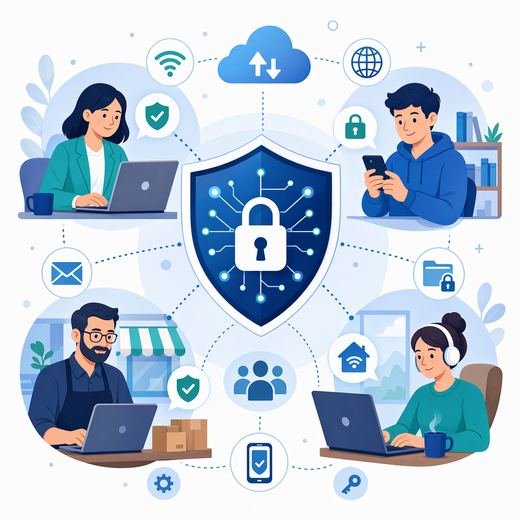
Cybersecurity used to sound like something that belonged only to IT departments, system administrators, or large companies with complex digital infrastructure. Today, that idea no longer reflects reality. In a connected world where personal banking, work communication, shopping, healthcare, and social relationships all run through digital platforms, cybersecurity has quietly become part of ordinary life.
Many people still think of cyber threats as dramatic events that happen to famous companies or governments. In reality, most digital risk shows up in more familiar ways. It appears in phishing emails that pretend to be from a bank, fake delivery messages that ask for a quick click, weak passwords reused across multiple accounts, or social media messages designed to manipulate trust. These threats are not always highly technical. Very often, they work because they exploit habit, distraction, or urgency.
That is why cybersecurity is no longer only about technology. It is about behavior. A strong security culture begins with ordinary decisions: updating devices, using different passwords, turning on multi-factor authentication, checking links before opening them, and questioning requests that feel emotionally manipulative. These actions may look small, but together they create a strong first line of defense.
Workplaces have felt this change clearly. A single employee opening the wrong attachment can create problems for an entire company. A rushed decision in a remote work setting can expose sensitive information. In many organizations, the human side of security matters just as much as the software side. Training, awareness, and clear internal processes often prevent more damage than expensive tools alone.
The same pattern applies at home. Families now store years of personal history in their phones and laptops. Photos, financial apps, identity documents, private messages, and account access all live on connected devices. Losing control of that information can be stressful not only financially, but emotionally. Security, in that sense, protects peace of mind as much as data.
What makes the subject more important is the speed at which digital habits are changing. New apps, smart devices, cloud tools, and AI systems enter daily life faster than most people can fully evaluate them. Convenience grows quickly, but awareness often lags behind. When that happens, people may assume something is safe simply because it feels modern, polished, or easy to use.
Cybersecurity asks for a different mindset. Instead of assuming trust, it encourages verification. Instead of reacting only after something goes wrong, it values prevention. That does not mean living in fear of technology. It means using digital tools with a little more intention.
In the end, cybersecurity is not only a technical discipline. It is a shared daily responsibility shaped by choices, habits, and attention. The people who stay safest online are not always the most technical. Often, they are simply the ones who learn to slow down, notice risk, and treat digital safety as part of everyday life.
That practical awareness also spreads outward. When one person in a family or team improves their habits, others often become more careful as well. In that sense, cybersecurity behaves like culture: it strengthens when ordinary people model it consistently.