Why Human Creativity Still Matters in the Age of AI
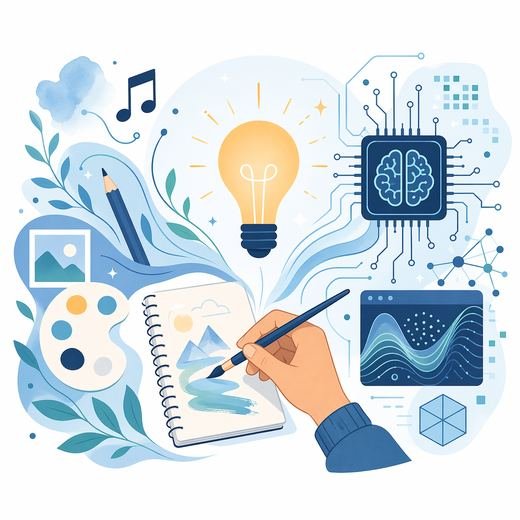
As artificial intelligence becomes more capable, one question appears again and again: if machines can write, design, compose, and generate ideas, what happens to human creativity? It is an understandable concern. AI can now produce images in seconds, suggest article outlines, draft marketing copy, and imitate styles with surprising speed. Yet speed and output are not the same as creativity in its fullest human sense. That difference matters more now than ever.
Human creativity is not only about producing content. It is tied to memory, emotion, contradiction, risk, and lived experience. When a person creates something meaningful, the work often carries traces of struggle, insight, humor, culture, and personal history. A machine can assemble patterns based on training data, but it does not know heartbreak, hope, embarrassment, ambition, or the quiet details that give art and ideas their emotional weight. It can simulate tone. It cannot live the story behind it.
This is why AI often works best as a creative partner rather than a creative substitute. For example, a writer may use AI to brainstorm headlines, organize notes, or test alternate phrasing. A designer may use it to generate early visual concepts. A musician may explore variations more quickly than before. In each case, the real value still comes from human judgment. Someone must decide what feels authentic, what serves the message, and what deserves to be kept.
Originality also depends on intention. Two people can be given the same tool and produce entirely different results because they bring different instincts, standards, and perspectives. Creativity is shaped by taste, and taste is difficult to automate because it grows from experience. A strong creative person does more than ask what can be made. They ask why it should be made, who it is for, and what feeling or truth it should carry. Those questions remain deeply human.
There is also a danger in confusing abundance with value. AI can generate a large volume of content very quickly, but more does not always mean better. In fact, the ease of generation may make human originality even more important. When digital spaces become crowded with polished but emotionally flat output, people are likely to respond more strongly to work that feels personal, grounded, and unmistakably real. Authenticity becomes easier to recognize when imitation grows everywhere.
The workplace offers a practical example of this. Businesses increasingly use AI for routine creative tasks, but the strongest campaigns, products, and stories still depend on human insight. Brands need people who understand nuance, audience emotion, cultural timing, and the difference between something technically correct and something truly memorable. Creativity is often not about filling a page. It is about seeing what others miss.
Rather than ending human creativity, artificial intelligence may force it to become more intentional. People may rely less on routine production and more on vision, storytelling, interpretation, and emotional clarity. That is not a loss. It is a reminder of what creativity has always been at its best.
In the age of AI, human creativity still matters because it remains the source of meaning. Machines can assist, accelerate, and imitate. Humans still imagine, feel, choose, and create with purpose. And purpose is what turns output into art, communication, and connection.